Soumen Basu
Assistant Professor
Department of Artificial Intelligence
IIT KHARAGPUR
Department of Artificial Intelligence
IIT KHARAGPUR
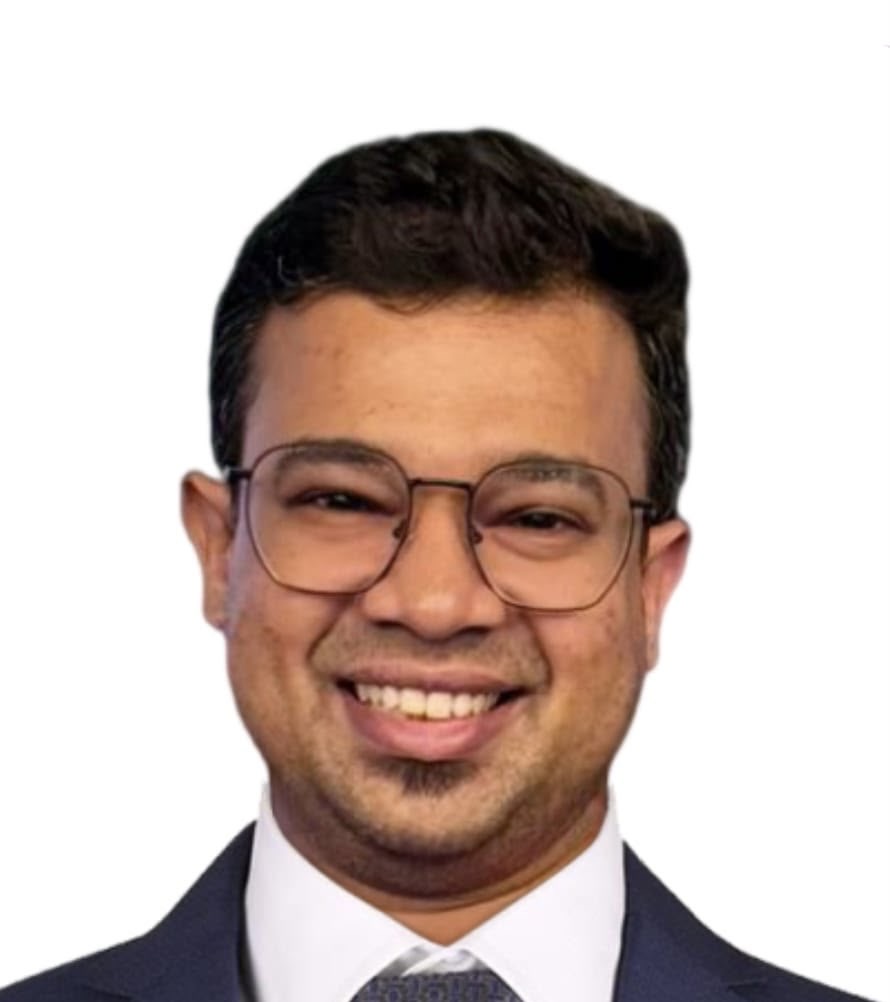
At IIT KGP, I direct the Computer Vision and Intelligence Lab. We work broadly in Computer Vision, Deep Learning, with a particular interest in learning from limited, noisy supervision for safety-critical tasks. I pioneered deep neural network models for detecting gallbladder cancer from ultrasound. My research has been published at leading venues such as CVPR, MICCAI, WACV and in Medical Image Analysis, The Lancet Regional Health, and Indian J. of Gastroenterology. Our work was covered by News Medical, The Indian Express, The Economic Times, and Business Standard.
Before joining IIT Kharagpur, I was a Research Scientist at Meta in New York, working on Model Scalability Innovations in the Foundational AI area. Earlier roles took me through Samsung R&D, Amazon, and Adobe — industry experience that shaped how I think about translational aspects of AI research.
Now, as an Assistant Professor at the Department of Artificial Intelligence, IIT Kharagpur, I am working on computer vision and intelligence for translational applications such as healthcare for Indian context.
My research philosophy lies in the belief that scaling parameters isn't the only frontier — but scaling who AI actually reaches, is. The following are some of the threads I am actively working on:
Semi- and self-supervised techniques that pull relevant features out of noisy, sparsely labelled data. Efforts include leveraging novel techniques, investigating generative AI, and also frontier world-model approaches.
Investigating novel techniques for automated disease detection in medical imaging. Emphasis is placed on developing robust and accurate models for Cancer/ other relevant disease diagnosis for indian population.
Lightweight architectures for offline and edge deployment — low latency, low energy, privacy-preserving — so real-time diagnostics can run on point-of-care devices in rural clinics.
I am exploring how to design domain-specific saliency methods and standardized metrics to understand how well the explanations align with domain-knowledge relevance and real decisions.
Anchoring generative AI to reality, validating diagnostic systems so they stay safe, calibrated, and ethically sound.
Full list on Google Scholar.
Our research is primarily hands-on and experimental in nature. Our core contributions are technical and algorithmic novelties in the Computer Vision and Medical AI space. If you are passionate about building robust AI systems that solve real-world problems, I would love to hear from you.
Note: I am currently NOT hiring interns/ project staff, and unfortunately would not be able to respond to such queries.What I look for:
What I offer:
Please check my previous papers to get an understanding. If interested, reach out with your CV, and a brief note on what specific problems you would like to work on.
soumen@ai.iitkgp.ac.in